
Part-Time Property Agent in Singapore: 2026 Guide


Yes, you can legally work as a part-time property agent in Singapore, and the pathway is more structured than most people expect. The Council for Estate Agencies makes no distinction between part-time and full-time licensing. Both carry identical professional standing, identical compliance obligations, and identical earning potential. What separates a licensed agent from someone simply handing out name cards is formal registration with a CEA-licensed agency, not the number of hours worked per week.
To qualify, you must meet these baseline requirements:
Be at least 21 years old
Hold Singapore Citizen or Permanent Resident status (Employment Pass, S Pass, and Work Permit holders are not eligible)
Possess a minimum of four GCE ‘O’ Level passes, or WPLN Level 5 equivalency across Reading, Writing, Speaking, Listening, and Numeracy
Complete a CEA-approved Real Estate Salesperson (RES) course and pass both exam papers meeting the minimum passing score
Register with a licensed property agency before conducting any transactions
The commission-based income model means earnings are variable, but that variability cuts both ways. A single well-executed transaction can generate meaningful income, and your existing salary provides the financial cushion to pursue deals with patience rather than pressure.
Table of Contents
How to become a part-time property agent in Singapore
The licensing process follows a clear sequence. Each step has scheduling options designed for working adults, so the path is genuinely manageable alongside a full-time job.
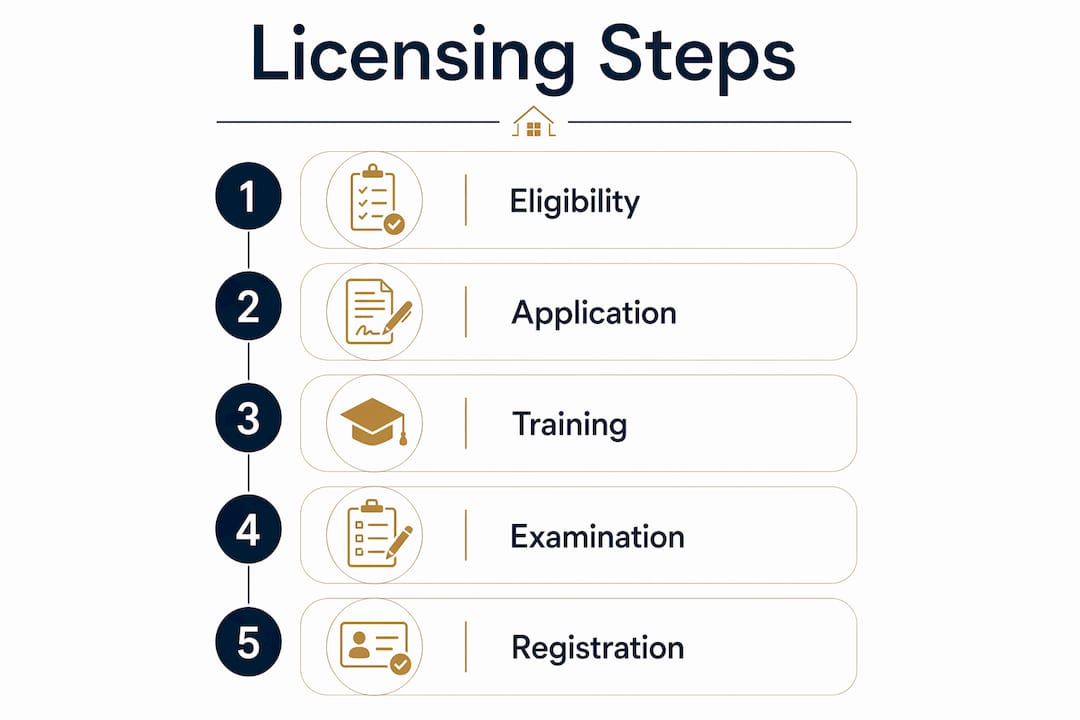
Confirm your eligibility. Verify your citizenship or PR status, age, and academic qualifications before spending a dollar. If you lack four ‘O’ Level passes, the WPLN Level 5 route is a legitimate alternative that CEA accepts.
Enroll in a CEA-approved RES course. Course providers offer weekend and evening schedules specifically for working adults. The course covers property law, agency practice, and market regulations. Expect roughly 9 days of classroom instruction spread across several weeks, depending on the schedule you choose.
Pass both RES exam papers. Each paper requires a minimum score of 60% to pass. The exams test your knowledge of property legislation, agency duties, and transactional procedures. Study groups and official practice papers are the most effective preparation tools.
Register with a CEA-licensed agency. You cannot operate independently. Choose an agency that actively supports part-time agents with mentoring, marketing tools, and CRM access. ERA Real Estate, for example, offers structured onboarding and training resources through programs like those detailed at Myeracareer.
Budget for startup and ongoing costs. RES course fees and total startup costs typically amount to S$2,500, including exam fees, registration, insurance, and portal subscriptions. Annual recurring costs for license renewal, agency fees, and CPD run S$600–S$800.
Explore funding options. SkillsFuture Credits can offset RES course fees for eligible Singaporeans. The Union Training Assistance Programme (UTAP) provides additional co-funding for NTUC members. These programs meaningfully reduce the financial barrier to entry.
Plan your schedule before your first client call. Decide in advance which evenings and weekends you are available for viewings and client meetings. Communicating your availability clearly from the start prevents the mismatched expectations that derail many new part-time agents.
Step | Key Action | Estimated Cost |
Eligibility check | Confirm citizenship, age, qualifications | None |
RES course | Enroll in weekend or evening schedule | S$800–S$1,200 |
RES exam | Pass both papers at 60% or above | Included or separate fee |
Agency registration | Join a CEA-licensed agency | Part of S$2,500 total |
Annual compliance | CPD, renewal, portal subscriptions | S$600–S$800/year |
Why a part-time real estate career in Singapore makes sense
The financial case for starting part-time is straightforward. Your primary job salary continues uninterrupted, which means you can afford to be selective about the deals you pursue. Full-time agents who depend entirely on commissions sometimes feel pressure to close transactions that are not in their clients’ best interests. As a part-timer, that pressure largely disappears.
The benefits extend well beyond income security:
Flexible scheduling around family and personal commitments. Most new launch showflats open on weekends, which aligns naturally with a Monday-to-Friday work schedule. Rental transactions also tend to close faster than resale deals, making them a practical entry point for agents with limited time.
A low-risk path to testing a career change. You can spend several months building your client base and closing your first deals before deciding whether to transition fully into real estate. If it is not the right fit, your day job remains intact.
Exposure to Singapore’s property market without full financial dependency. Working with buyers and sellers across HDB resale, private condominiums, and new launches builds genuine market knowledge that compounds over time.
Commission upside from even a small number of transactions. A single successful deal in the private residential segment can generate a commission that rivals or exceeds a month’s salary from many professional roles.
Control over your own professional development. You choose which property types to specialize in, which neighborhoods to focus on, and which clients to prioritize, building a portfolio that reflects deliberate choices rather than desperation.
The dual career model also builds resilience. Real estate markets move in cycles, and having a stable income base during slower periods allows you to stay in the industry long enough to benefit when conditions improve.
What challenges do part-time property agents actually face?
Candor matters here. The challenges are real, and underestimating them is the most common reason part-time agents exit the industry within their first year.
Competition from full-time agents who are always available. A buyer who cannot reach you during a Tuesday afternoon viewing may simply call the next agent on their list. Full-time agents can respond immediately; you often cannot.
Fixed costs that do not scale with deal volume. Portal subscriptions, CPD requirements, and annual fees apply regardless of how many transactions you close. Agents who close only one or two deals per year find that these recurring fixed costs significantly compress net income.
Long commission payment cycles. For HDB resale and private property transactions, the timeline from signing an Option to Purchase to receiving your commission typically runs 3–6 months. Rental deals pay out faster, usually within a week of closing, but the commission quantum is smaller.
Slower reputation building. Full-time agents accumulate client referrals, market knowledge, and professional visibility at a faster rate simply because of the hours they invest. Part-timers build the same credibility, but the timeline is longer.
Burnout risk from stacking two demanding roles. A high-pressure weekday job combined with weekend viewings and evening client calls is genuinely taxing. Without deliberate boundaries, the combination becomes unsustainable.
Policy complexity requiring constant attention. Singapore’s property regulations, including Additional Buyer’s Stamp Duty (ABSD) rates and HDB eligibility rules, change with some frequency. Staying current requires time that part-timers must carve out of an already compressed schedule.
The fixed-cost reality: Startup costs alone typically reach S$2,500, and annual compliance expenses of S$600–S$800 continue regardless of transaction volume. Agents who close fewer deals absorb these costs against a smaller commission base, making the first 12–18 months the most financially demanding period of a part-time career.
Practical tips that actually move the needle for part-time agents
Success as a part-time agent comes down to working with precision rather than volume. The agents who thrive are not the ones who try to match full-timers hour for hour. They are the ones who build systems that work when they are not actively working.
Communicate your availability upfront and consistently. Tell clients your available hours from the first conversation. Clients value reliability far more than round-the-clock access, and setting clear expectations prevents the frustration that comes from missed calls during work hours.
Build a niche rather than chasing every deal. Specializing in a specific property type, such as executive condominiums or HDB resale in a particular town, lets you develop genuine expertise that clients recognize and refer. Depth beats breadth when your time is limited.
Use CRM tools and automation to maintain responsiveness. Auto-replies, scheduled follow-ups, and organized contact databases mean that a client inquiry at 2 PM on a Tuesday gets an immediate acknowledgment even if your detailed response comes at 7 PM. Tools like Google Calendar and Trello help manage viewing schedules without double-booking.
Partner with a mentor or team that covers your gaps, as recommended in property management tasks to delegate to professionals, to maintain continuous client service and support your part-time work. Agencies with structured team arrangements allow part-time agents to have colleagues handle urgent client needs during working hours, with reciprocal arrangements for after-hours coverage. This kind of agency support is one of the strongest predictors of part-time success.
Leverage TikTok as a lead generation channel. Agents who post 3–5 TikToks per week using search-optimized captions generate qualified buyer and seller leads within 30–60 days. TikTok’s algorithm is interest-based rather than follower-based, which means a new account with zero followers can reach thousands of potential clients if the content matches what people are actively searching for.
Batch your content creation. Filming five to seven short videos in a single morning, then scheduling them throughout the week, keeps your digital presence active without consuming daily time. Neighborhood tours, market updates, and buyer education content perform consistently well for Singapore-based agents.
Pro Tip: Use TikTok Creator Search Insights to identify content gaps in your local market. Search terms like your neighborhood name or “HDB resale tips” will surface high-demand topics with limited existing content. Creating videos that fill those gaps puts your content in front of buyers who are already searching, bypassing cold prospecting entirely.
What can you realistically earn as a part-time agent?
Income as a part-time agent is entirely commission-based, which means the range is genuinely wide. A single rental transaction might generate a commission of one month’s rent. A private condominium resale deal can produce a commission measured in the tens of thousands of Singapore dollars. The gap between those two outcomes reflects transaction volume, property segment, and market conditions rather than hours worked.
New launch condominiums tend to be particularly lucrative for part-time agents because developer commissions are often structured to reward agents who bring qualified buyers, and showflat events are concentrated on weekends. Agents who specialize in this segment can close meaningful deals without requiring weekday availability.
The financial safety net of a primary job salary changes the psychology of deal-making in a way that directly affects outcomes. Part-time agents who are not financially dependent on their next commission can afford to wait for the right transaction rather than pushing clients toward deals that are not in their interest. That patience often produces better client relationships and stronger referral pipelines over time.
Factor | Part-time agent | Full-time agent |
Income base | Primary job salary plus commissions | Commissions only |
Deal pressure | Lower; can wait for right opportunities | Higher during slow periods |
Commission payout timeline | Several months for resale; approximately a week for rentals | Same |
Annual fixed costs | S$600–S$800 regardless of deal volume | Same |
Startup investment | S$2,500 | Same |
Availability for clients | Evenings and weekends primarily | Full week |
How CEA licensing and compliance work for part-time agents
The regulatory framework governing property agents in Singapore is established under the Estate Agents Act, administered by the Council for Estate Agencies. CEA sets the licensing standards, enforces conduct requirements, and manages the CPD scheme that all registered salespersons must complete annually.

This equivalence is significant. Part-time agents carry the same legal authority to transact, the same professional obligations to clients, and the same exposure to disciplinary action for misconduct. The RES designation is not a lesser credential because it is held by someone who also works another job.
CPD requirements apply on an annual basis. Agents must accumulate a specified number of CPD hours through CEA-approved courses and activities, covering topics like property law updates, ethics, and market practices. Staying current with these requirements is non-negotiable, and the time commitment is fixed regardless of how many deals you close in a given year.
One compliance point that catches some part-time agents off guard: your primary employer’s HR policies may restrict secondary employment or require disclosure of outside income. Singapore’s tax authority will record your commission income, so transparency with your employer from the outset avoids complications later.
How do full-time and part-time property agents compare?
The most honest comparison is not about licensing status. It is about availability, deal flow, and the financial model each agent operates under.

Full-time agents invest their entire working week into prospecting, client meetings, viewings, paperwork, and professional development. That volume of activity typically produces faster reputation building, a larger active client base, and higher annual transaction counts. The trade-off is complete financial dependence on commissions, which creates pressure during slow market periods.
Part-time agents operate with a narrower availability window but a more stable financial foundation. The primary job salary removes the desperation factor that can compromise a full-time agent’s judgment during lean months. Part-timers who build a niche and manage their time deliberately can close a meaningful number of transactions per year, particularly in segments like new launches and rentals that align with weekend and evening schedules.
The career trajectory also differs. Many of Singapore’s most experienced full-time agents started part-time, using the initial period to build their client base, refine their specialty, and develop the market knowledge needed to compete at a higher level. The part-time phase is often a deliberate investment rather than a permanent limitation. Agents who want to explore that progression can find structured support through experienced agent programs that bridge the gap between part-time and full-time practice.
Are there specific legal restrictions for part-time agents in Singapore?
The short answer is no, with one important caveat. CEA imposes no restrictions on part-time practice specifically. The licensing requirements, conduct standards, and CPD obligations are identical for all registered salespersons regardless of the hours they work.
The caveat is employment law and contractual obligations. If your primary employer’s contract includes a non-compete clause, a restriction on secondary employment, or a requirement to disclose outside business activities, you are legally bound by those terms. Real estate agency work is clearly a commercial activity, and most HR departments will identify commission income during annual tax filing. Reviewing your employment contract before enrolling in the RES course is a practical first step, not an afterthought.
Beyond employment contracts, the Estate Agents Act requires that all property transactions be conducted through your registered agency. You cannot accept fees or commissions directly from clients outside of the agency structure, and you cannot represent yourself as an agent without valid CEA registration. These rules apply equally to full-time and part-time agents, and violations carry the same penalties regardless of how many hours per week you work.
Foreigners on Employment Passes, S Passes, or Work Permits are categorically ineligible for RES registration. This restriction has no part-time exception.
Myeracareer gives part-time agents a structured path forward
Starting a real estate career alongside an existing job is a calculated decision, not a compromise. The licensing process, the costs, and the competitive dynamics are all manageable when you have the right agency and mentorship structure behind you.

Myeracareer, the career platform for ERA Real Estate in Singapore, is built specifically for agents who want more than a license. The platform offers RES exam guidance, structured onboarding, AI-powered sales tools through the Sales+ app, digital coaching, and performance tracking designed to help new agents close their first deals without the guesswork that typically slows early-career progress. For part-time agents, the team-based model at ERA means you have colleagues and mentors covering client needs when your primary job demands your attention, a practical solution to the availability gap that challenges most part-timers.
If you are ready to take the first step, explore the new agent pathway at Myeracareer to review licensing requirements, training schedules, and the support structure ERA provides. For those further along who want to understand how team leadership and mentoring work in practice, Donny Lee’s team offers a direct look at how ERA structures career growth for agents at every stage.
Key Takeaways
Part-time property agents in Singapore carry the same CEA license, the same professional obligations, and the same earning potential as full-time agents, making this a viable and credible career path for working adults.
Point | Details |
Licensing equivalence | CEA applies identical requirements and CPD obligations to part-time and full-time agents. |
Startup investment | Total costs typically reach S$2,500, with annual compliance running S$600–S$800. |
Commission timeline | Resale transactions take 3–6 months from signing to payout; rental deals close in roughly one week. |
TikTok lead generation | Agents posting 3–5 search-optimized TikToks per week generate qualified leads within 30–60 days. |
Myeracareer support | ERA’s platform provides RES guidance, AI sales tools, and team mentoring tailored for part-time agents. |
Recommended
Comments