
90 Day CEA Aligned Agent Coaching Framework for Singapore Team Leaders

An effective agent coaching framework combines a sequenced 90-day onboarding plan, weekly activity-led coaching, and measurable KPIs tied to real transactions, not just training completion. The recommended structure pairs a documented playbook with short weekly check-ins and monthly data-backed reviews. MyEraCareer builds this around ready-to-use templates and a 90-day playbook so leaders don’t start from a blank page.
TL;DR:
Agents should reach full transaction ownership within 90 days, with clear milestones at 30, 60, and 90 days including logged activity and deal progress.
Use measurable KPIs such as outbound touches, scheduled appointments, and CRM task completion to track activity and identify early signs of underperformance.
Weekly coaching should focus on current activity and obstacles, with deeper biweekly deal reviews, while monthly performance reviews establish ongoing accountability.
Mentorship must involve live deal reviews and goal-oriented guidance; ineffective mentorship often lacks measurable outcomes and accessible, active involvement.
Implementing a structured, sequenced onboarding playbook and performance templates streamlines new agent development and improves retention compared to ad hoc approaches.
Table of Contents
What Are the Core Components of an Agent Coaching Framework?
A framework that actually works stands on five pillars, and none of them function alone. Skip one, and the whole structure wobbles: agents complete onboarding but never touch the CRM, or they learn scripts but have no one reviewing their live deals.
Onboarding sequence. A structured path from licensing to first transaction, broken into weekly milestones rather than a single orientation day.
Skills curriculum. Prospecting, objection handling, negotiation, and closing taught in an order that matches when agents actually need each skill.
Mentorship and one-to-one support. Regular, scheduled time with an experienced agent who reviews real deals, not hypothetical ones.
Tools and adoption. CRM, lead routing, and sales apps introduced with a clear business reason attached to each one.
Governance and standards. Compliance checkpoints, CPD tracking, and review cadence baked into the calendar instead of chased after the fact.
The payoff compounds. Solid onboarding shortens time-to-first-appointment. Consistent tool adoption keeps pipelines visible instead of living in an agent’s head. Clean governance means fewer compliance surprises during a CPD audit cycle. Each pillar feeds the next: onboarding creates the habit of using the tools, tool adoption creates consistent activity, and consistent activity is what eventually turns into predictable production. Leaders who treat these as one connected system, rather than five separate initiatives, see better 90-day retention and faster time-to-first-transaction than those who bolt on mentorship or tool training as an afterthought.
How Do You Structure a 90-Day Onboarding Playbook?
Certification proves an agent knows the rules. It doesn’t prove they can hold a conversation with a nervous seller or negotiate against a sharper agent on the other side. The gap between the two is what a 90-day playbook is built to close.
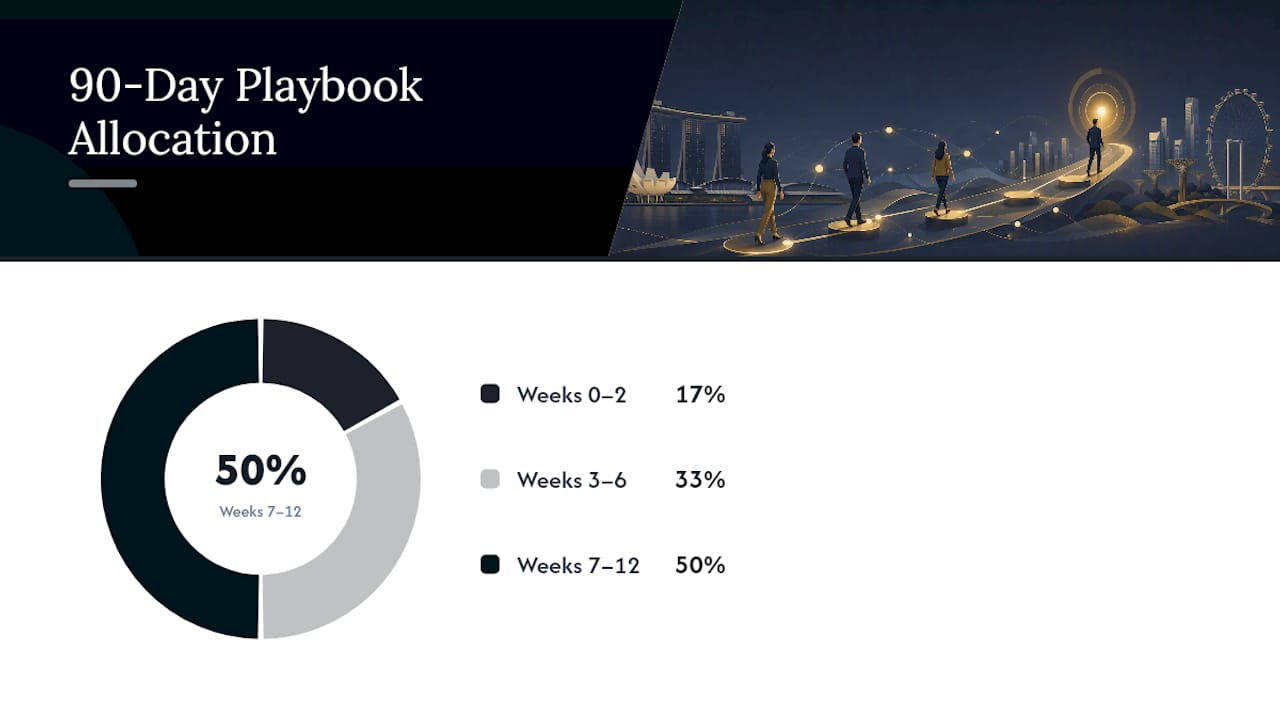
Weeks 0 to 2: Finish compliance items, confirm CRM and app logins, complete broker review sign-off, and begin shadowing a mentor on live appointments while practicing scripts in low-stakes settings.
Weeks 3 to 6: Build a lead follow-up rhythm, book the first solo appointments, run weekly role-play sessions, and work directly inside the CRM rather than around it.
Weeks 7 to 12: Take ownership of a transaction start to finish, practice negotiation with mentor feedback, start building a referral habit, and track time-to-first-transaction against the 90-day target.
Each 30-day mark needs its own evidence, not a gut feeling. At 30 days: logged activity and completed shadowing sessions. At 60 days: appointments booked and CRM records that look lived-in. At 90 days: at least one transaction in motion or closed. Programs that sequence role-play, shadowing, and CRM integration this deliberately give new agents a visible path to that first deal instead of a vague sense they’re “getting there.” MyEraCareer’s new agent onboarding playbook maps this exact sequence week by week.
Pro Tip: Don’t wait until day 90 to check whether the sequence is working. If an agent hasn’t booked an appointment by the end of week 6, that’s your signal to intervene, not a footnote for the quarterly review.
Which KPIs Actually Predict Agent Success?
Coaching without data is just opinion with good intentions. The leaders who get the best results track a tight set of leading indicators, not vanity metrics.
Outbound touches (calls, messages, and door knocks per week)
Conversations that actually happen, not attempts
Appointments set and appointments held
Tasks completed inside the CRM on schedule
Consistency of CRM logging, since a pipeline nobody updates is a pipeline nobody can coach
One coherent principle ties this together: inspect what you expect. If an agent commits to 20 outbound touches a week, that number should show up in the CRM without you asking for it. When it doesn’t, that’s the trigger for an escalation queue: a short list of agents whose activity has dropped below their agreed threshold, reviewed at every weekly check-in until the numbers recover.
Regulatory checkpoints belong in this same review, not in a separate compliance folder. Surface RES registration status and CPD progress directly inside the monthly review so nothing slips through simply because it wasn’t on the coaching agenda.
How Should You Run a Coaching One-on-One?
Cadence is where most coaching frameworks quietly fail. A monthly review alone is too slow to catch a stalled agent before frustration turns into resignation.
Weekly: 15 to 20 minutes on current activity and any blockers, kept short enough to actually happen every week.
Biweekly: A deeper look at two or three live deals, focused on negotiation and next steps.
Monthly: A structured performance review covering the full picture.
A performance review template only needs five fields to work: activity snapshot, pipeline health, the one behavior to change, the agreed action with a named owner, and a timeline for checking it. MyEraCareer’s performance review templates use exactly this structure, and it translates cleanly into a coaching script:
That single sentence does three things a vague “keep up the good work” never does: it names the number, ties it to a behavior, and sets a deadline. Feedback that skips any of those three tends to evaporate by the following week.
How Do You Choose the Right Mentor for a New Agent?
Mentorship and coaching solve different problems, and conflating them is where a lot of programs go wrong. Coaching is the structured, metric-driven cadence covered above. Mentorship is closer to an apprenticeship: a more experienced agent walking alongside a newer one through live deals, absorbing judgment calls that no script fully captures.
Good mentorship should include one-on-one deal review, direct shadowing, and a sequenced curriculum rather than ad hoc advice whenever someone remembers to give it. Watch for warning signs that a mentorship pairing isn’t working:
No live deal review, only secondhand storytelling about past deals
Advice that’s never tied to a measurable outcome
A mentor who’s hard to reach or guards access like a gatekeeper
The stronger model is a “success circle” rather than a single hero mentor: one person strong on operations, one strong on sales conversations, and one who thinks strategically about market positioning. New agents paired with real guardrails and live deal exposure consistently learn faster than those left to figure it out through trial and error.
What Does Rolling Out This Framework Actually Look Like?
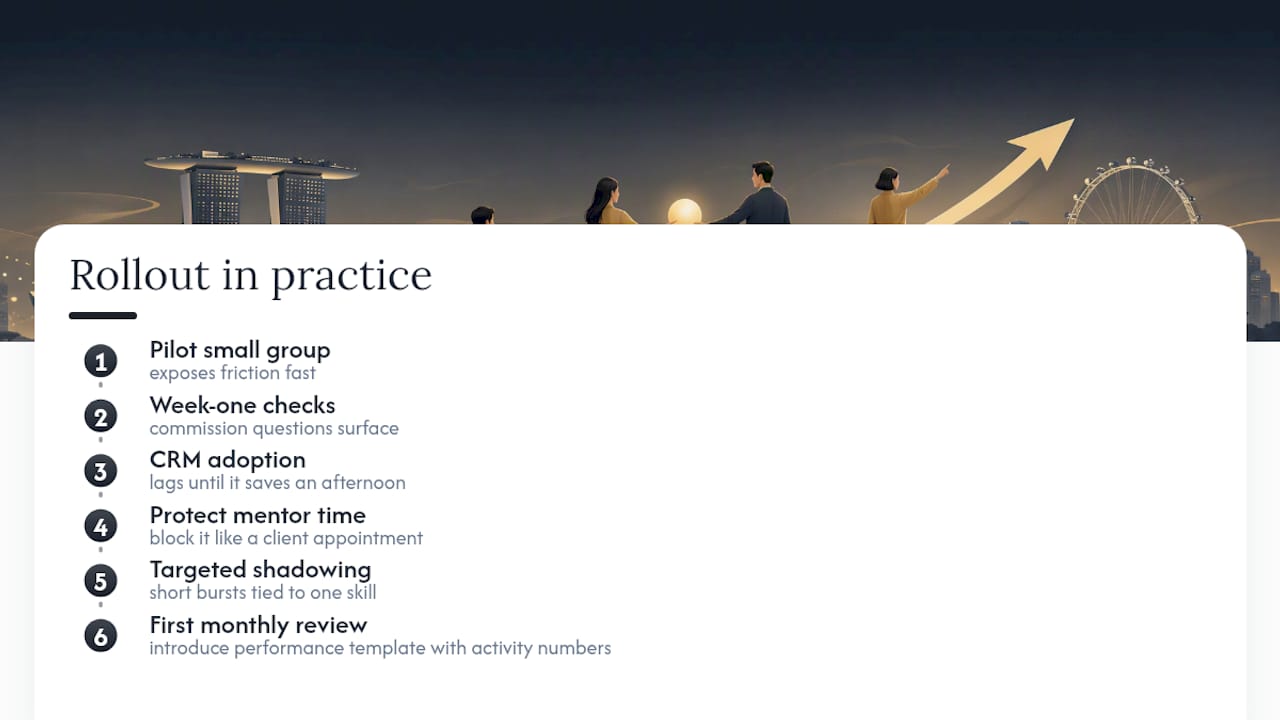
Piloting the 90-day playbook with a small group first, before rolling it agency-wide, exposes friction fast. Commission structure questions surface in week one. CRM adoption lags until an agent sees it save them an afternoon, not just get demoed to them.
Protecting mentor time matters more than it sounds. Block it on the calendar like a client appointment, or it gets eaten by whichever fire is loudest that week. Shadowing works best in short, focused bursts tied to a specific skill, not a full day of vague observation. And the performance review template earns its place fastest in the first monthly review, when an agent sees their own activity numbers laid out plainly for the first time.
— Donny
How MyEraCareer Supports Your Coaching Rollout
Building this framework from scratch costs time most team leaders don’t have, especially while still running their own pipeline. MyEraCareer gives you the operational pieces already assembled: a documented 90-day onboarding playbook, performance review templates with the fields covered above, and recruiting strategies designed to fill your roster with agents who are ready to follow this exact structure.

If you’re a new agent working through RES registration and want a clear path from licensing to your first transaction, the New Agents page walks through what onboarding looks like from day one. If you’re an experienced agent weighing a move to a team with a real coaching cadence instead of a sink-or-swim culture, the Experienced Agents page outlines what that transition involves. Team leaders ready to put a turnkey playbook and review templates in front of their own roster should visit Experienced Team Leaders and request a briefing on how the templates apply to your team’s current numbers.
Where to Go Next for Licensing and Templates
For RES registration and exam steps, start with CEA’s official guidance. For CPD obligations that belong inside your review cadence, see the CPD requirements breakdown. For the playbook itself, MyEraCareer’s onboarding resources cover the full sequence.
Sources
Recommended
Comments